
How to Choose from the Best Phones Under 30000
If you are searching for the best phones under 30000 in India, you are looking at the most exciting and competitive smartphone segment in the market today. A few years ago, buying a mid-range phone meant sacrificing either processing power, camera quality, or build materials. Today, the lines between “mid-range” and “flagship” are increasingly blurred.
Buyers spending this amount can realistically expect premium features: 120Hz curved AMOLED displays, OIS-stabilized Sony primary sensors, incredibly fast charging (often exceeding 80W), and processors capable of sustained gaming at 60fps. However, because no single phone offers everything, choosing the right device requires looking past the marketing sheets.
This guide cuts through the noise. Based on published testing, benchmark databases, and manufacturer specifications, we have analyzed the Indian smartphone market to find the genuinely top devices. Whether your priority is ad-free software, periscope zoom cameras, or raw gaming performance, here is exactly what you should buy right now.
Quick Verdict
| Phone | Best For | Approx. Price | Key Highlight |
|---|---|---|---|
| OnePlus Nord 4 | Best Overall | ₹29,999 | Snapdragon 7+ Gen 3, Metal unibody, 5500mAh |
| Poco F6 5G | Best Gaming | ₹29,999 | Snapdragon 8s Gen 3, 90W charging, 1.5K display |
| Realme 13 Pro+ | Best Camera | ₹29,999 – ₹32,999 | 50MP Periscope Telephoto, Sony LYT-701 main |
| Nothing Phone (2a) Plus | Best Clean Software | ₹27,999 | Nothing OS, Unique design, Dual 50MP |
| Realme GT 6T | Best Display & Battery | ₹30,999 | 6000-nit peak AMOLED, 120W charging |
| Motorola Edge 50 Pro | Best Premium Design | ₹29,999 – ₹31,999 | IP68 rating, 144Hz pOLED, 50W wireless |
| Vivo V30e | Best Selfie Camera | ₹27,999 | 50MP Eye AF front camera, 5500mAh battery |
| Samsung Galaxy A35 | Best Long-Term Support | ₹27,999 – ₹30,999 | IP67 rating, 4 years OS updates, Knox |
(Note: Smartphone pricing fluctuates based on sales and bank offers. The prices listed above reflect standard market selling prices at the time of publication.)
OnePlus Nord 4 — Best Overall
Quick Specifications
| Price | ₹29,999 (8GB/128GB) |
| Display | 6.74″ 1.5K AMOLED, 120Hz, 2150 nits peak |
| Processor | Snapdragon 7+ Gen 3 |
| RAM / Storage | 8GB / 128GB (UFS 3.1) or 256GB (UFS 4.0) |
| Rear Camera | 50MP (Sony LYT-600, OIS) + 8MP Ultrawide |
| Front Camera | 16MP |
| Battery / Charging | 5500mAh / 100W SUPERVOOC |
| Software | OxygenOS 14 (Android 14) |
| IP Rating / Weight | IP54 / 199.5g |
Design and Build
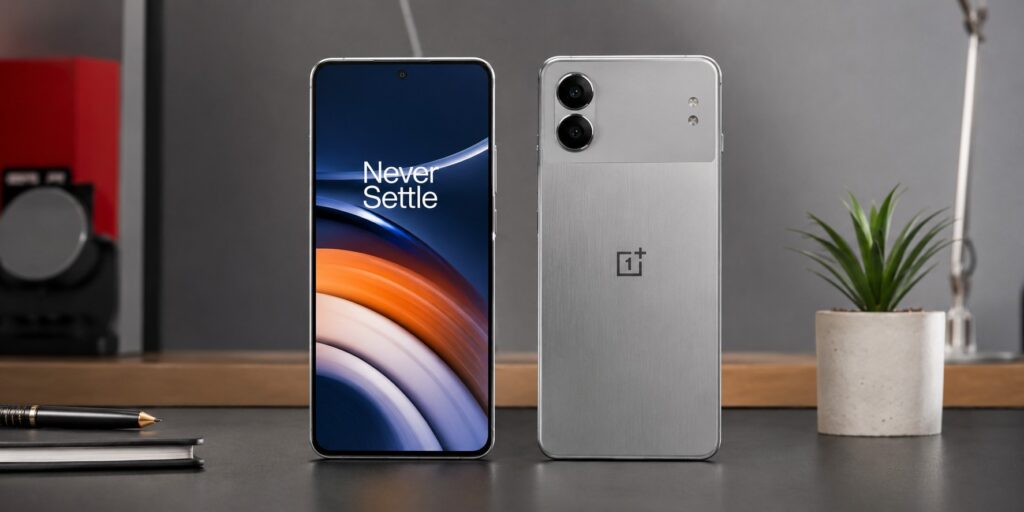
The OnePlus Nord 4 resurrects a design philosophy that the industry abandoned years ago: the metal unibody. Machined from a single block of aluminum, the device feels undeniably more premium and robust than its glass or plastic competitors. Despite the metal construction, it maintains a reasonable 199.5g weight and an 8.0mm thickness. The classic OnePlus Alert Slider is present on the left edge. The IP54 rating is adequate for splashes, though it falls short of the IP68 protection seen on Motorola devices.
Display
OnePlus equipped the Nord 4 with a 6.74-inch 1.5K AMOLED panel. With a 120Hz refresh rate and a peak brightness of 2150 nits, the display is sharp and vivid. It supports ultra HDR and ProXDR, making multimedia consumption a highlight. Independent reviews indicate excellent outdoor legibility, while the “Aqua Touch” feature ensures the screen registers taps accurately even when wet.
Performance
Powered by the Qualcomm Snapdragon 7+ Gen 3, the Nord 4 is a powerhouse. This chipset shares architecture with the flagship Snapdragon 8 Gen 3, meaning everyday fluidity is practically guaranteed. It handles heavy multitasking effortlessly. While benchmark testing shows the Poco F6 slightly edges it out in raw GPU metrics, the Nord 4 sustains excellent frame rates in demanding titles like BGMI and Genshin Impact without severe thermal throttling, thanks to its aluminum chassis acting as a massive heatsink.
Cameras
The camera system is reliable, if not class-leading. The primary 50MP Sony LYT-600 sensor with OIS captures detailed daylight shots with the signature OnePlus contrast-heavy color science. Low-light photography is solid, maintaining good dynamic range without blowing out highlights. However, the 8MP ultrawide is distinctly average, showing softness at the edges. The 16MP front camera handles skin tones well but is restricted to 1080p video recording, which is disappointing for creators.
Battery and Charging
A massive 5500mAh battery paired with 100W wired charging is a formidable combination. According to manufacturer specifications, it can hit a full charge in roughly 28 minutes. Real-world testing by tech publications consistently praises the Nord 4 for easily pushing past a day and a half of moderate to heavy use.
Software and Updates
Running OxygenOS 14.1 on top of Android 14, the software is fluid, highly customizable, and mostly free of intrusive ads, though some uninstallable third-party apps are present out of the box. OnePlus has committed to four major Android OS updates and six years of security patches—an industry-leading policy in this price segment.
Pros and Cons
Pros
- Outstanding metal unibody design
- Superb battery life with 100W charging
- Class-leading 4-year OS update policy
- Excellent sustained performance
Cons
- Mediocre 8MP ultrawide camera
- Front camera capped at 1080p video
- Pre-installed third-party bloatware
Verdict
The OnePlus Nord 4 is the most balanced smartphone under ₹30,000. It doesn’t have the best camera, but its unmatched build quality, exceptional battery life, powerful chipset, and long-term software support make it the safest, smartest recommendation for the average buyer.
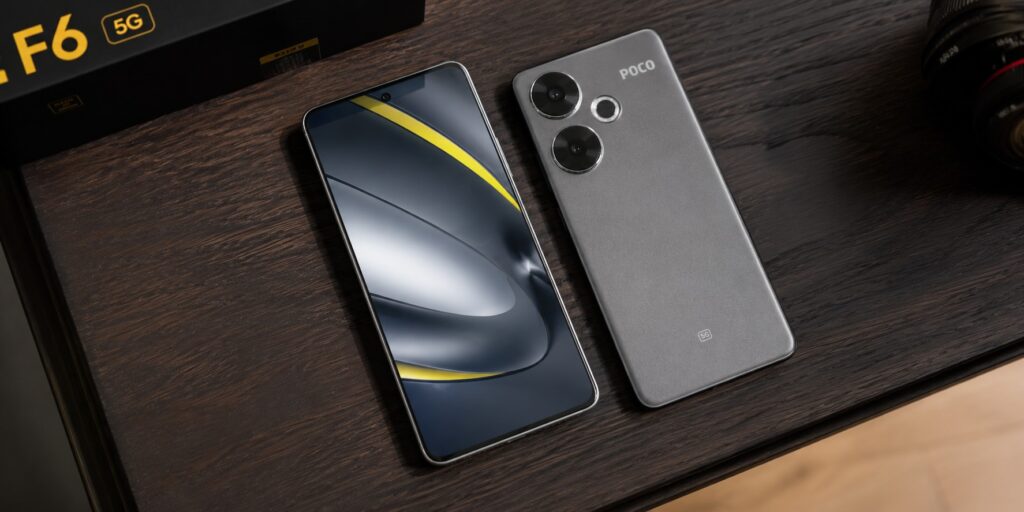
Poco F6 5G — Best for Gaming
Quick Specifications
| Price | ₹29,999 (8GB/256GB) |
| Display | 6.67″ 1.5K OLED, 120Hz, 2400 nits peak |
| Processor | Snapdragon 8s Gen 3 |
| RAM / Storage | 8GB / 256GB (UFS 4.0) |
| Rear Camera | 50MP (Sony IMX882, OIS) + 8MP Ultrawide |
| Front Camera | 20MP |
| Battery / Charging | 5000mAh / 90W (120W in box) |
| Software | Xiaomi HyperOS (Android 14) |
| IP Rating / Weight | IP64 / 179g |
Design and Build
The Poco F6 focuses entirely on internal hardware, which is evident in its build. The polycarbonate back and plastic frame feel distinctly mid-range, though the matte finish resists fingerprints well. At 179g and 7.8mm thick, it is remarkably lightweight and comfortable for long gaming sessions. An IP64 rating provides decent dust and splash resistance.
Display
The 6.67-inch 1.5K OLED panel is superb for media and gaming. It supports a 120Hz refresh rate, 480Hz touch sampling rate for rapid gaming responses, and a peak brightness of 2400 nits. The inclusion of Dolby Vision and HDR10+ ensures that supported Netflix and YouTube content looks punchy, with deep blacks and excellent contrast.
Performance
This is the main event. The Poco F6 is the first phone in India to feature the 4nm Snapdragon 8s Gen 3. In synthetic benchmarks like AnTuTu, it routinely scores above 1.4 million, completely overpowering the competition. Real-world gaming performance is stellar; it easily holds 60fps in heavy RPGs on high settings. Poco’s massive 4800mm² IceLoop vapor chamber cooling system ensures the device remains relatively cool, preventing heavy frame drops during extended sessions.
Cameras
Gaming phones often neglect cameras, but the F6 is competent. The 50MP Sony IMX882 main sensor captures sharp, vibrant daylight images with fast autofocus. It struggles slightly with motion blur in low light despite OIS, but night mode helps salvage still shots. The 8MP ultrawide is functional but unremarkable. Video recording goes up to 4K at 60fps on the rear, which produces well-stabilized footage.
Battery and Charging
A standard 5000mAh battery provides a full day of use under normal conditions, though heavy gaming will deplete it by early evening. It supports 90W fast charging (with a 120W brick included in the box), taking the phone from zero to 100% in roughly 35 minutes.
Software and Updates
The phone ships with Xiaomi’s HyperOS based on Android 14. HyperOS is visually polished and highly optimized for smooth animations, but it comes with a fair amount of bloatware. Poco promises 3 years of major OS updates and 4 years of security patches, which is very respectable for a gaming-focused device.
Pros and Cons
Pros
- Unrivaled processing power in this segment
- Bright, sharp 1.5K Dolby Vision display
- Lightweight and comfortable to hold
- Extremely fast UFS 4.0 storage
Cons
- Plastic build lacks a premium feel
- Average ultrawide camera
- HyperOS contains bloatware
Verdict
If you are a mobile gamer, the Poco F6 is the undisputed champion under ₹30,000. It offers raw performance and storage speeds that rival phones costing twice as much. Buyers prioritizing premium design or top-tier cameras should look elsewhere, but for pure speed, the F6 is unmatched.

Realme 13 Pro+ 5G — Best Camera
Quick Specifications
| Price | ₹32,999 (Often available near ₹29,999 with offers) |
| Display | 6.7″ FHD+ Curved OLED, 120Hz, 2000 nits peak |
| Processor | Snapdragon 7s Gen 2 |
| RAM / Storage | 8GB / 256GB |
| Rear Camera | 50MP (OIS) + 50MP Periscope (3x) + 8MP UW |
| Front Camera | 32MP |
| Battery / Charging | 5200mAh / 80W |
| Software | Realme UI 5.0 (Android 14) |
| IP Rating / Weight | IP65 / 190g |
Design and Build
Realme leans heavily into luxury aesthetics with the 13 Pro+. Featuring a “Monet-inspired” design, vegan leather or shimmering glass backs, and a massive circular camera module, it looks incredibly expensive. The curved edges make the 190g phone feel thinner than it is, ensuring a comfortable grip. It boasts an IP65 rating, guarding against dust and low-pressure water jets.
Display
The 6.7-inch curved OLED display is visually striking. With a 120Hz refresh rate, 2160Hz PWM dimming for eye comfort, and 2000 nits of peak brightness, it is a fantastic panel for media consumption. The curved edges look premium, though they can result in accidental touches for some users.
Performance
This is the phone’s Achilles heel. The Snapdragon 7s Gen 2 is a decidedly average processor for a ₹30,000 device. While it handles daily tasks like social media, messaging, and YouTube without breaking a sweat, it lacks the horsepower for heavy gaming. Benchmark scores fall significantly behind the OnePlus Nord 4 and Poco F6. It prioritizes efficiency over raw power.
Cameras
The camera system is the sole reason to buy this phone. The Realme 13 Pro+ features a 50MP Sony LYT-701 main sensor and, crucially, a 50MP Sony LYT-600 periscope telephoto lens with 3x optical zoom. In daylight, the main camera captures flagship-level detail with excellent dynamic range. The periscope lens is a rarity in this segment, offering stunning optical compression for portraits and retaining incredible detail up to 6x digital zoom. Realme’s AI algorithms further enhance skin tones and low-light clarity. The 8MP ultrawide is standard fare, but the 32MP front camera takes crisp, flattering selfies.
Battery and Charging
The 5200mAh battery easily powers through a full day, largely thanks to the power-efficient processor. The 80W fast charging tops up the device from zero to full in just under 50 minutes.
Software and Updates
Running Realme UI 5.0 based on Android 14, the software is feature-rich but plagued by “Hot Apps” and pre-installed bloatware, though much of it can be uninstalled. Realme promises 2 years of OS updates and 3 years of security patches, which is slightly below the current industry standard.
Pros and Cons
Pros
- Class-leading periscope telephoto camera
- Stunning, premium design
- Excellent battery life
- Beautiful curved OLED display
Cons
- Underwhelming Snapdragon 7s Gen 2 processor
- Only 2 years of OS updates
- Pre-installed bloatware and ads
Verdict
The Realme 13 Pro+ is for users who care deeply about photography—especially portraits and zoom shots—and care very little about gaming. If you are willing to sacrifice raw processing power for a camera system that punches way above its price tag, this is the phone to buy.
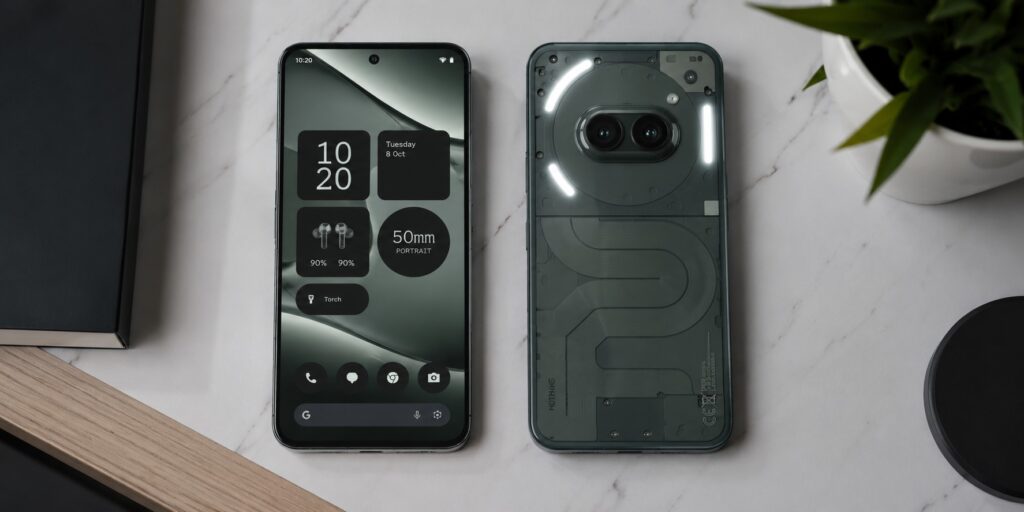
Nothing Phone (2a) Plus — Best Software Experience
Quick Specifications
| Price | ₹27,999 (8GB/256GB) |
| Display | 6.7″ FHD+ Flexible AMOLED, 120Hz |
| Processor | MediaTek Dimensity 7350 Pro 5G |
| RAM / Storage | 8GB / 256GB |
| Rear Camera | 50MP (OIS) + 50MP Ultrawide |
| Front Camera | 50MP |
| Battery / Charging | 5000mAh / 50W |
| Software | Nothing OS (Android 14) |
| IP Rating / Weight | IP54 / 190g |
Design and Build
Nothing’s signature transparent design language continues with the (2a) Plus. The plastic back reveals internal-like aesthetic elements, centered around a metallic-looking coil and the horizontal dual-camera setup. It features the “Glyph Interface”—a simplified set of LED lights on the back that sync with ringtones, notifications, and timers. It’s polarizing, but undeniably unique. The plastic build feels slightly less premium than glass or metal, but it keeps the phone light at 190g.
Display
The 6.7-inch flexible AMOLED panel is flat, symmetrical, and surrounded by impressively uniform, slim bezels. It supports a 120Hz refresh rate and gets sufficiently bright for outdoor use. The color reproduction is highly accurate, favoring natural tones over the saturated looks of its competitors.
Performance
The custom Dimensity 7350 Pro chipset is a capable mid-range performer. It won’t top benchmark charts, but it handles UI navigation, rapid app switching, and moderate gaming with complete fluidity. Independent reviews note that thermals are well-managed, meaning the phone doesn’t get uncomfortably hot during regular use.
Cameras
Nothing has equipped the device with a triple 50MP setup (Main, Ultrawide, and Front). The main 50MP sensor with OIS delivers natural-looking photos with excellent dynamic range and minimal artificial sharpening. The 50MP ultrawide is a massive step up from the 8MP sensors flooding this segment, offering high-resolution wide shots that don’t look muddy on the edges. The 50MP selfie camera captures incredibly detailed self-portraits.
Battery and Charging
A 5000mAh battery delivers excellent endurance, easily lasting a full day even with the Glyph lights active. Charging speed is capped at 50W, which takes about an hour for a full charge. Note: The phone does not come with a charger in the box.
Software and Updates
Software is this phone’s superpower. Nothing OS 2.6 is a breath of fresh air—completely devoid of bloatware, ads, or unnecessary duplicated apps. The dot-matrix typography, monochrome icon packs, and custom widgets create a cohesive, highly optimized aesthetic. Nothing guarantees 3 years of OS updates and 4 years of security patches.
Pros and Cons
Pros
- Cleanest, bloat-free software in the segment
- Excellent 50MP ultrawide camera
- Symmetrical display bezels
- Unique design with Glyph LEDs
Cons
- No charger included in the box
- Plastic back is prone to scratches
- Processing power trails behind Poco and OnePlus
Verdict
If you despise ads, bloatware, and cluttered software, the Nothing Phone (2a) Plus is your sanctuary. It prioritizes the actual user experience over raw numbers, offering a balanced, reliable, and incredibly stylish daily driver.
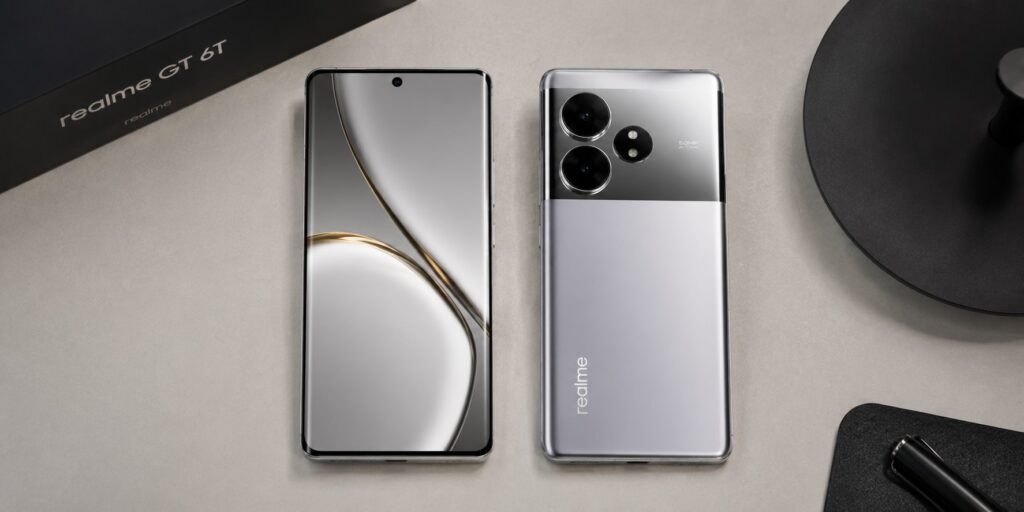
Realme GT 6T — Best Display and Battery
Quick Specifications
| Price | ₹30,999 (Regularly available under ₹30k with offers) |
| Display | 6.78″ 1.5K LTPO AMOLED, 120Hz, 6000 nits peak |
| Processor | Snapdragon 7+ Gen 3 |
| RAM / Storage | 8GB / 128GB (UFS 3.1) or 256GB (UFS 4.0) |
| Rear Camera | 50MP (OIS) + 8MP Ultrawide |
| Front Camera | 32MP |
| Battery / Charging | 5500mAh / 120W |
| Software | Realme UI 5.0 (Android 14) |
| IP Rating / Weight | IP65 / 191g |
Design and Build
The Realme GT 6T sports a dual-tone mirror finish on its plastic back. While the glossy finish is highly reflective and attracts fingerprints instantly, the phone feels solid. At 191g, it balances a massive battery within a reasonable footprint. An IP65 rating provides good peace of mind against the elements.
Display
This is the brightest display in the segment. The 6.78-inch 1.5K LTPO AMOLED panel boasts a localized peak brightness of an absurd 6000 nits (though daily high-brightness mode peaks around 1600 nits). Crucially, the LTPO technology allows the refresh rate to drop dynamically from 120Hz to 1Hz, saving significant battery. Watching HDR content on this screen is a flagship-tier experience.
Performance
Mirroring the OnePlus Nord 4, the GT 6T uses the Snapdragon 7+ Gen 3. Performance is virtually identical—blazing fast UI navigation, excellent multitasking, and high frame rates in heavy games. A massive vapor chamber ensures that heat is dissipated efficiently during long Call of Duty: Mobile sessions.
Cameras
The 50MP Sony LYT-600 primary camera is solid, capturing vibrant photos with a tendency to boost reds and greens. It’s a reliable point-and-shoot camera for social media. The 8MP ultrawide, however, is a steep drop in quality, lacking detail in low-light scenarios. Video maxes out at 4K 60fps on the main lens with decent stabilization.
Battery and Charging
This is where the GT 6T dominates. The 5500mAh battery combined with the LTPO display results in incredible endurance, often stretching to two days for light users. When it does die, the included 120W SUPERVOOC charger fills the battery from 0 to 50% in roughly 10-12 minutes, and to 100% in under 30 minutes.
Software and Updates
Realme UI 5.0 is fluid and packed with customization, but it does include bloatware and some notification spam out of the box (which can be disabled). Realme offers 3 years of OS updates and 4 years of security patches.
Pros and Cons
Pros
- Class-leading 1.5K LTPO display
- Absurdly fast 120W charging
- Massive 5500mAh battery
- Powerful Snapdragon 7+ Gen 3 chip
Cons
- Glossy back is a fingerprint magnet
- Bloatware in the UI
- Average ultrawide camera
Verdict
The Realme GT 6T is the ultimate media consumption and battery anxiety-killer. If you spend hours watching videos, browsing the web, or gaming, and absolutely despise waiting for your phone to charge, this is a phenomenal purchase.
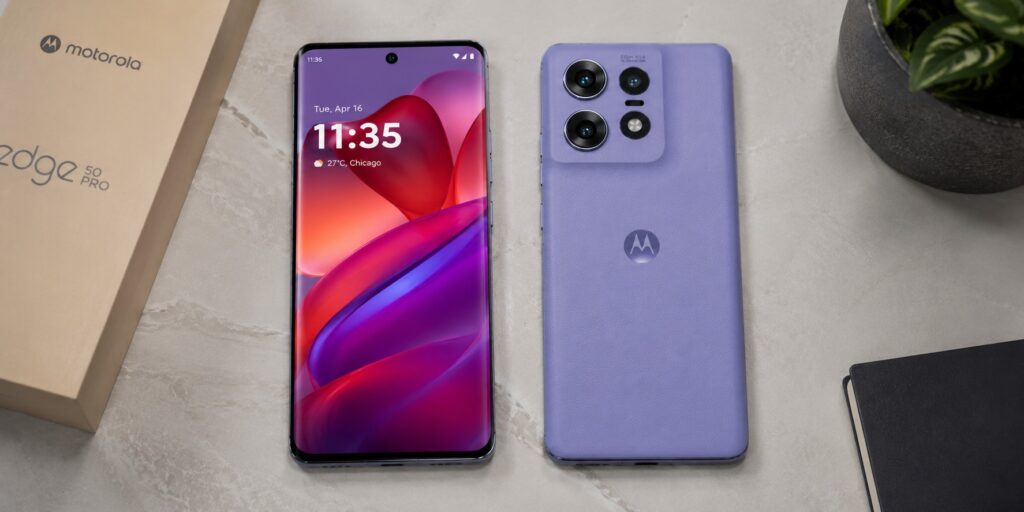
Motorola Edge 50 Pro — Best Premium Design
Quick Specifications
| Price | ₹31,999 (Base drops below ₹30k during sales) |
| Display | 6.7″ 1.5K pOLED, 144Hz, 2000 nits peak |
| Processor | Snapdragon 7 Gen 3 |
| RAM / Storage | 8GB / 256GB |
| Rear Camera | 50MP (OIS) + 13MP UW + 10MP Telephoto (3x) |
| Front Camera | 50MP (Autofocus) |
| Battery / Charging | 4500mAh / 68W wired (125W supported), 50W wireless |
| Software | Hello UI (Android 14) |
| IP Rating / Weight | IP68 / 186g |
Design and Build
Motorola brings true flagship build quality to the ₹30,000 segment. With an aluminum frame, premium vegan leather or pearl-finish back panels, and an official IP68 rating (full water submersion), the Edge 50 Pro feels exquisite. At 186g, it is perfectly balanced and ergonomic.
Display
The 6.7-inch 1.5K curved pOLED display is Pantone-validated for color accuracy. It features a blazing 144Hz refresh rate, resulting in impossibly smooth scrolling. With 2000 nits peak brightness, it remains easily visible under direct sunlight.
Performance
The Snapdragon 7 Gen 3 is a capable mid-range chip, but it is noticeably less powerful than the 7+ Gen 3 or 8s Gen 3. It handles day-to-day tasks, multitasking, and casual gaming flawlessly. However, hardcore gamers looking for sustained 60fps in heavy titles will notice occasional frame drops.
Cameras
The versatile triple-camera setup is rare at this price. The 50MP main camera captures bright, slightly saturated photos. The 13MP ultrawide doubles as a macro lens and performs well. The standout is the 10MP 3x optical telephoto lens, offering great zoom capabilities for portraits. The 50MP front camera includes autofocus, ensuring sharp selfies regardless of arm distance.
Battery and Charging
To maintain a slim profile, Motorola opted for a smaller 4500mAh battery. It gets through a full day of moderate use, but heavy users might need an evening top-up. The base variant includes a 68W charger (though the phone supports 125W). Uniquely for this segment, it supports 50W wireless charging and 10W reverse wireless charging.
Software and Updates
Motorola’s new Hello UI is a near-stock Android experience injected with tasteful AI features and custom fonts. It is entirely ad-free and minimal. However, Motorola has historically been very slow with software rollouts. It promises 3 years of OS updates and 4 years of security patches.
Pros and Cons
Pros
- IP68 rating and gorgeous vegan leather design
- Versatile camera setup with 3x optical zoom
- 50W wireless charging
- Clean, near-stock software
Cons
- Battery is smaller than the competition (4500mAh)
- Processor is average for the price
- Motorola’s track record for update speed is poor
Verdict
If you want a phone that looks and feels like it costs ₹80,000, buy the Motorola Edge 50 Pro. It offers a premium feature set (IP68, wireless charging, telephoto lens) that its rivals ignore, making it the perfect everyday phone for non-gamers.
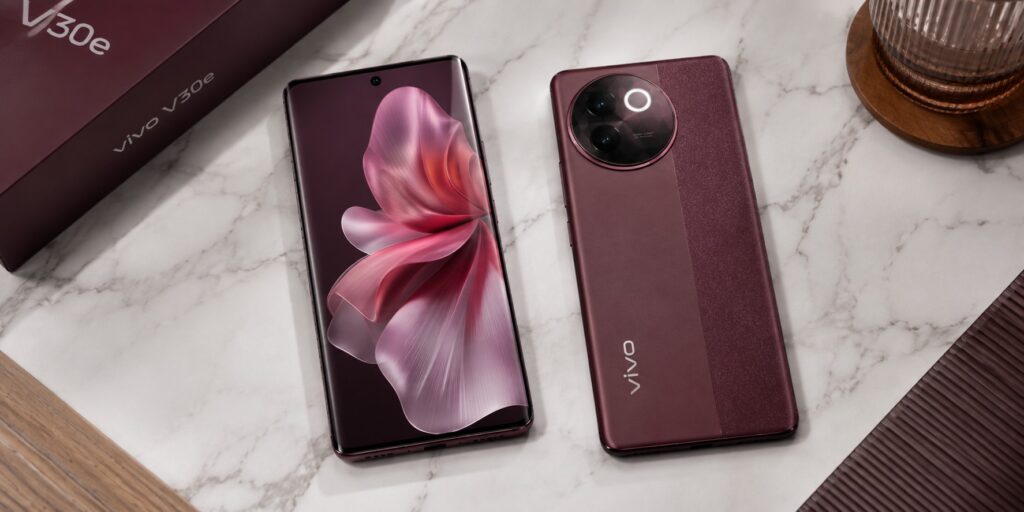
Vivo V30e — Best Selfie Camera
Quick Specifications
| Price | ₹27,999 (8GB/128GB) |
| Display | 6.78″ FHD+ Curved AMOLED, 120Hz |
| Processor | Snapdragon 6 Gen 1 |
| RAM / Storage | 8GB / 128GB or 256GB |
| Rear Camera | 50MP (Sony IMX882, OIS) + 8MP UW + Aura Light |
| Front Camera | 50MP (Eye AF) |
| Battery / Charging | 5500mAh / 44W |
| Software | Funtouch OS 14 (Android 14) |
| IP Rating / Weight | IP64 / 179g (Blue) – 188g (Red) |
Design and Build
The Vivo V30e is aggressively styled for the offline market, featuring a massive circular “Gem Cut” camera module and a dual-tone back panel (available in Silk Blue or a tactile Velvet Red). Amazingly, despite housing a 5500mAh battery, it remains remarkably thin at roughly 7.65mm. It is a stunning, fashionable device with IP64 protection.
Display
It features a 6.78-inch curved AMOLED display with a 120Hz refresh rate. It is vibrant and offers deep contrast, typical of Vivo’s V-series. The curved edges enhance the premium feel, making the device comfortable to swipe from the sides.
Performance
The Snapdragon 6 Gen 1 is the weakest chipset on this list. It is designed for efficiency rather than raw power. Daily operations like WhatsApp, Instagram, and web browsing run fine, but heavy gaming is out of the question. You will experience longer app loading times compared to the Poco F6 or Nord 4.
Cameras
Vivo’s camera algorithms are tailored for human subjects. The 50MP Sony IMX882 main sensor performs admirably, assisted by the physical “Aura Light” ring flash on the back, which provides soft, temperature-adjustable lighting for night portraits. The 50MP Eye-Autofocus front camera is spectacular—capturing incredibly sharp selfies with excellent skin-tone mapping.
Battery and Charging
The 5500mAh battery paired with the low-power Snapdragon 6 Gen 1 results in legendary battery life, easily pushing into a second day. Charging is slower than rivals, capped at 44W, taking over an hour to reach 100%.
Software and Updates
Funtouch OS 14 is heavily customized and includes pre-installed third-party apps, though it is smoother than previous iterations. Vivo guarantees 3 years of Android updates and 4 years of security updates.
Pros and Cons
Pros
- Incredible 50MP Eye-AF selfie camera
- Ultra-slim design despite a huge battery
- Aura Light flash is genuinely useful for portraits
- Two-day battery life
Cons
- Underpowered Snapdragon 6 Gen 1 processor
- Slow 44W charging compared to peers
- Bloatware in Funtouch OS
Verdict
The Vivo V30e is strictly for users who prioritize fashion, selfies, and battery life over raw performance. It is a stylish lifestyle accessory with a highly capable portrait camera system.
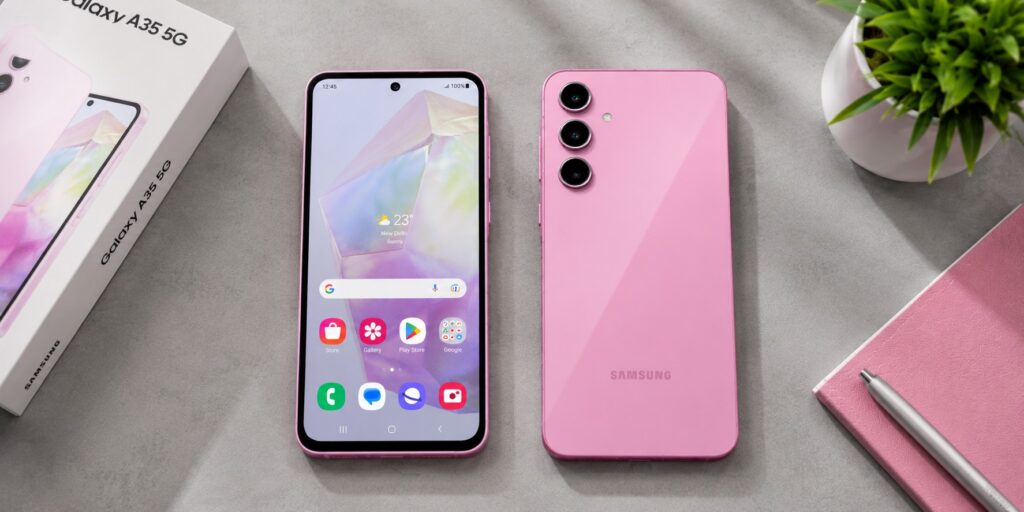
Samsung Galaxy A35 5G — Best Long-Term Support
Quick Specifications
| Price | ~₹27,999 – ₹30,999 |
| Display | 6.6″ FHD+ Super AMOLED, 120Hz |
| Processor | Exynos 1380 |
| RAM / Storage | 8GB / 128GB or 256GB |
| Rear Camera | 50MP (OIS) + 8MP UW + 5MP Macro |
| Front Camera | 13MP |
| Battery / Charging | 5000mAh / 25W |
| Software | One UI 6 (Android 14) |
| IP Rating / Weight | IP67 / 209g |
Design and Build
The Galaxy A35 adopts the minimalist design language of the flagship S24 series, featuring flat edges, individual camera rings, and a glass back (protected by Gorilla Glass Victus+). It feels substantial—perhaps a bit heavy at 209g. Its IP67 rating ensures excellent protection against dust and water submersion up to 1 meter.
Display
Samsung rarely misses with displays. The 6.6-inch Super AMOLED screen delivers rich colors, deep blacks, and a smooth 120Hz refresh rate. While the bezels are noticeably thicker than those on the Nothing Phone (2a) Plus or Motorola, the panel quality itself is excellent for streaming and reading.
Performance
The in-house Exynos 1380 processor is adequate but unremarkable. It handles One UI 6 smoothly for daily tasks, but it lacks the overhead for high-end gaming. If you try to run graphics-intensive games, you will experience frame drops and noticeable warming near the camera module.
Cameras
Samsung’s color science is consumer-friendly, delivering bright, punchy photos ready for social media. The 50MP main sensor with OIS performs reliably in daylight and decent in low light. The 8MP ultrawide is functional, and the 5MP macro is largely a filler lens. The 13MP front camera captures natural-looking selfies.
Battery and Charging
The 5000mAh battery provides a reliable full day of usage. However, the charging speeds are archaic for this segment. Capped at 25W, it takes over 80 minutes to charge completely, and Samsung does not include a charger in the box.
Software and Updates
This is the A35’s strongest asset. One UI 6 is incredibly polished, packed with features like Samsung Knox security and Secure Folder. Furthermore, Samsung guarantees 4 years of major OS updates and 5 years of security patches.
Pros and Cons
Pros
- Premium glass build with IP67 rating
- Superb 4-year OS update policy
- Polished and secure One UI software
- Excellent Super AMOLED display
Cons
- Thick display bezels
- Slow 25W charging (no charger in box)
- Underwhelming Exynos processor
Verdict
The Samsung Galaxy A35 is the safe, sensible choice. It is not designed to win benchmark tests or charging speed races. Instead, it offers peace of mind with enterprise-grade security, long-term software support, and a durable IP67 build.
Comparison Table
| Phone | Processor | Display | Battery/Charging | IP Rating | Software Updates |
|---|---|---|---|---|---|
| OnePlus Nord 4 | SD 7+ Gen 3 | 6.74″ 1.5K AMOLED (120Hz) | 5500mAh / 100W | IP54 | 4 OS / 6 Sec |
| Poco F6 | SD 8s Gen 3 | 6.67″ 1.5K OLED (120Hz) | 5000mAh / 90W | IP64 | 3 OS / 4 Sec |
| Realme 13 Pro+ | SD 7s Gen 2 | 6.7″ FHD+ OLED (120Hz) | 5200mAh / 80W | IP65 | 2 OS / 3 Sec |
| Nothing (2a) Plus | Dimensity 7350 Pro | 6.7″ FHD+ AMOLED (120Hz) | 5000mAh / 50W | IP54 | 3 OS / 4 Sec |
| Motorola Edge 50 Pro | SD 7 Gen 3 | 6.7″ 1.5K pOLED (144Hz) | 4500mAh / 68W | IP68 | 3 OS / 4 Sec |
How to Choose the Best Phone Under ₹30,000
Processor
At ₹30,000, you should expect a chipset capable of running heavy games and multitasking without stuttering. Top tier: Snapdragon 8s Gen 3, Snapdragon 7+ Gen 3 (Great for gamers). Mid tier: Dimensity 7350 Pro, Snapdragon 7 Gen 3 (Great for daily use).
Camera
Megapixel counts are marketing traps. A 50MP sensor with Optical Image Stabilization (OIS) will always outperform a cheap 108MP sensor without it. Look closely at secondary lenses. Phones that offer good ultrawide lenses (Nothing 2a Plus) or telephoto lenses (Realme 13 Pro+) hold distinct advantages.
Software Updates
A phone costing ₹30,000 should easily last 3 to 4 years. Check the manufacturer’s update policy. Samsung and OnePlus lead the pack with 4 years of OS updates.
Who Should Buy What?
- If you want the best overall phone → OnePlus Nord 4
- If you prioritize camera quality → Realme 13 Pro+ 5G
- If you are a gamer → Poco F6 5G
- If you want the best battery → Realme GT 6T
- If you want the cleanest software → Nothing Phone (2a) Plus
- If you want premium design → Motorola Edge 50 Pro
FAQ
Which is the best phone under ₹30,000 in India?
The OnePlus Nord 4 is currently the most balanced option. It offers a premium metal unibody, an excellent Snapdragon 7+ Gen 3 processor, a massive 5500mAh battery, and an impressive 4-year Android update policy.
Which phone has the best camera under ₹30,000?
The Realme 13 Pro+ takes the crown. It features a dedicated 50MP periscope telephoto lens with 3x optical zoom, delivering stunning DSLR-like portraits.
Which is the best gaming phone under ₹30,000?
The Poco F6 5G is the best gaming phone. Powered by the Snapdragon 8s Gen 3 processor and featuring a massive vapor chamber cooling system, it sustains high frame rates effortlessly.
Final Verdict: Which Is the Best Phone Under ₹30,000?
If you are stepping out today to buy a phone under ₹30,000, the OnePlus Nord 4 is the ultimate overall winner. Its combination of a metal unibody, long-term update policy, massive battery, and smooth performance makes it universally recommendable.
However, if you are a power user who prioritizes gaming above all else, the Poco F6 offers unmatched raw speed. Conversely, if your smartphone is primarily a photography tool, the Realme 13 Pro+ and its unique periscope lens will serve you best. The ₹30,000 segment no longer forces you to buy a bad phone—it simply asks you to decide what matters most to your daily life.