

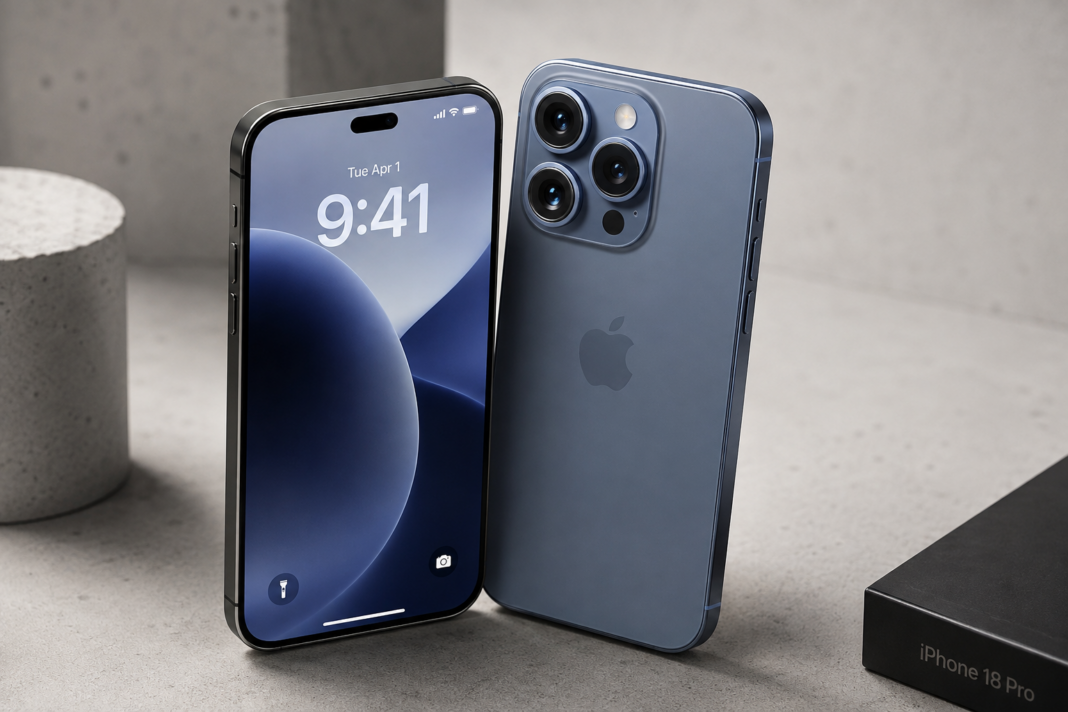

Apple September 9 Event: iPhone 18 Pro and iPhone Ultra — Everything We Expect
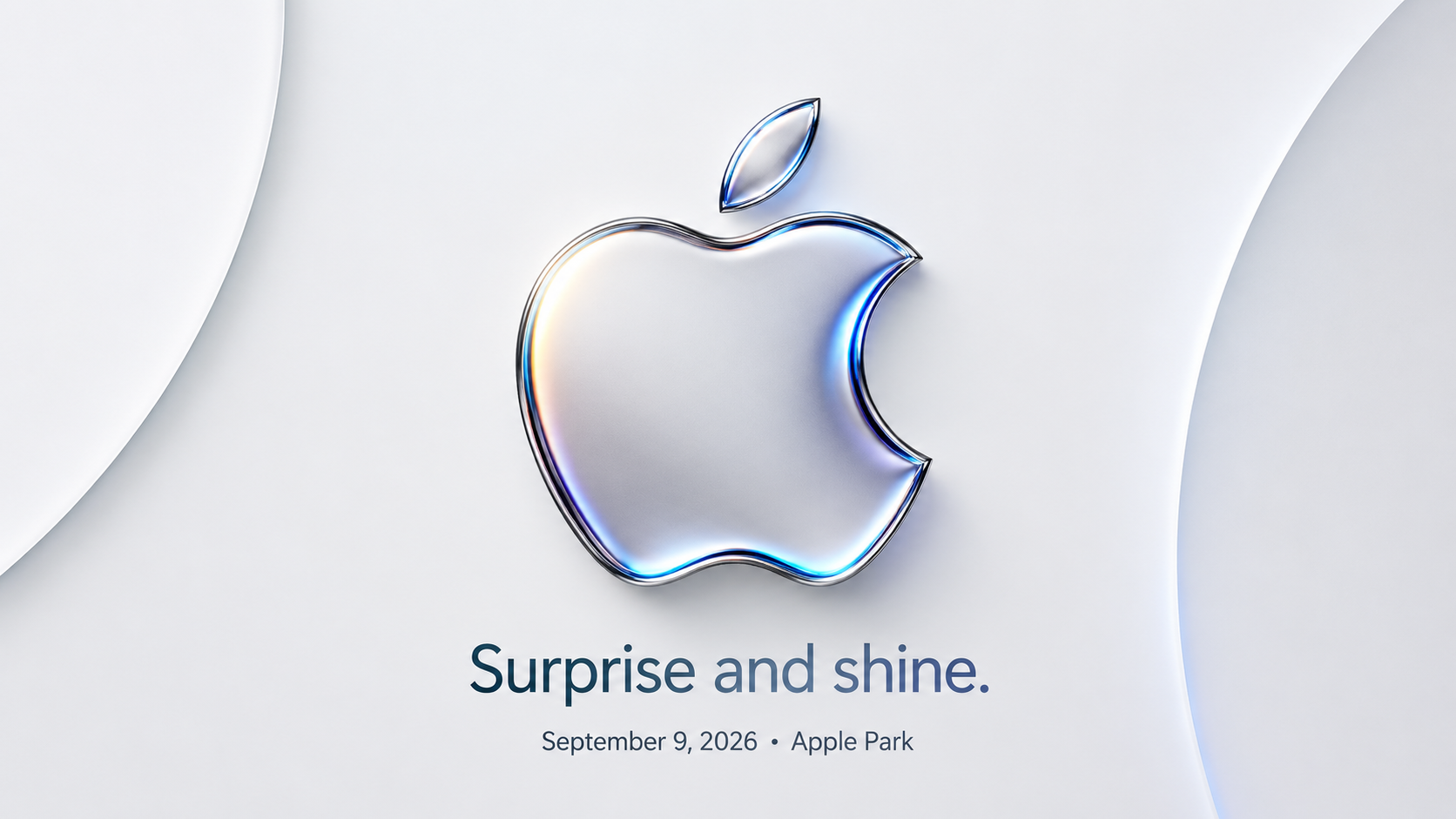
Apple has officially set the date for its most consequential hardware presentation in years. Media invitations sent on August 26 confirm that the next major Apple September 9 event will take place on Wednesday, September 9, 2026, streaming live from the Steve Jobs Theater at Apple Park in Cupertino, California. Carrying the cryptic tagline “Surprise and shine,” the presentation kicks off at 10:00 a.m. Pacific Time (1:00 p.m. Eastern Time / 10:30 p.m. IST).
While the September keynote has long served as Cupertino’s clockwork iPhone showcase, this gathering arrives under vastly different institutional and architectural stakes. The broadcast represents the inaugural flagship iPhone keynote led by incoming CEO John Ternus, who assumes executive leadership on September 1 following Tim Cook’s transition to Executive Chairman.
Beyond leadership changes, the hardware narrative itself is shifting. Supply-chain reports indicate Apple is upending its traditional four-device release strategy to debut the iPhone 18 Pro and iPhone 18 Pro Max alongside its long-anticipated, first-ever folding hardware—tentatively referred to by industry analysts as the rumored iPhone Ultra or iPhone Fold.
Apple Confirms Its September 9, 2026 Event Details
Apple Senior Vice President of Worldwide Marketing Greg Joswiak made the announcement public via social media, pairing an iridescent metallic rendering of the Apple logo with the phrase: “Surprise and shine! It’s almost time for the #AppleEvent, on Wednesday, September 9!”
Invitations for fall keynotes traditionally contain subtle nods to core engineering improvements. The dual wording in “Surprise and shine” has sparked distinct interpretations across industry desks:
- “Surprise” is widely viewed as a reference to a brand-new form factor—the entrance into foldable consumer hardware after nearly a decade of internal prototyping.
- “Shine” aligns with supply-chain leaks surrounding variable mechanical camera apertures engineered for low-light capture, as well as a refined polished-titanium chassis finish.
The global digital stream will be accessible across the official Apple Keynote Portal, the Apple TV application, and the company’s official YouTube channel.
Why the Apple September 9 Event Changes the Product Playbook
For over a decade, Apple’s autumn playbook followed an exact script: four new slab-style iPhones—two standard models and two Pro models—announced simultaneously and made available for pre-order within 48 to 72 hours.
In 2026, that synchronized timeline is fracturing. Reporting from Bloomberg Technology, Reuters, and supply-chain analyst Ming-Chi Kuo points to a bifurcated release calendar. High-end Pro hardware is moving to center stage in September, while entry and mid-tier devices (such as the standard iPhone 18 and a refreshed iPhone SE/18e) are reportedly pushed into a separate spring launch window.
This structural pivot allows Apple to insulate its highest-margin devices, address the complex yield rates associated with early foldable production, and counter the cadence of Android competitors who dominate the summer and early autumn foldable cycle. You can check our smartphones news section for previous generation performance comparisons.
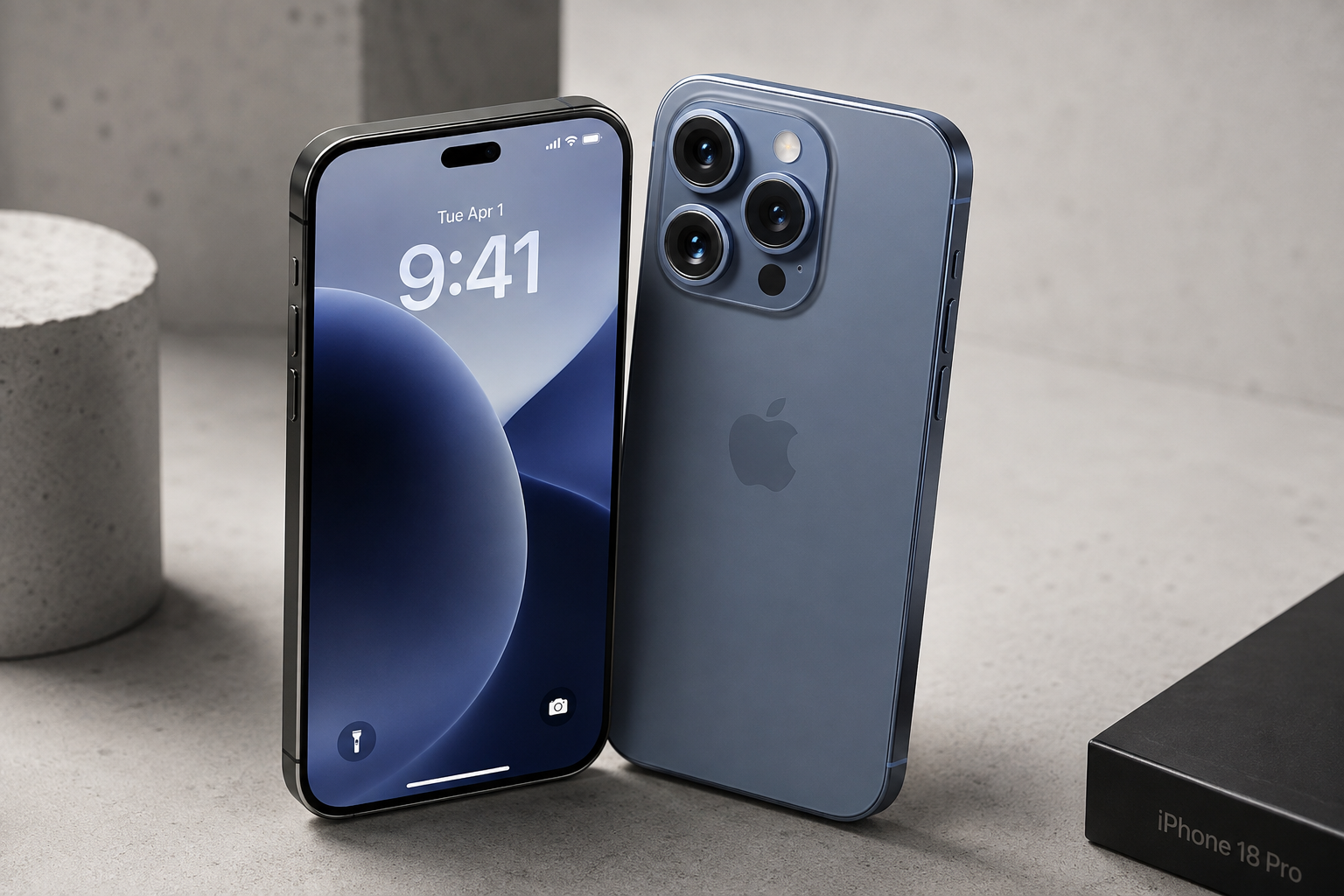
iPhone 18 Pro: Key Architecture Upgrades
The standard-sized Pro flagship, expected to retain its 6.3-inch diagonal footprint, represents Apple’s testbed for next-generation silicon and optical precision.
+-------------------------------------------------------------+
|                      iPhone 18 Pro                          |
|                                                             |
|  [=== Dynamic Island ===]  <- Shrunk ~25-30% (Under-display |
|                               infrared sensors)             |
|                                                             |
|                                                             |
|  [ Triple Camera System ]  <- 48MP Variable Aperture (Main) |
|                               48MP Ultra-Wide               |
|                               48MP Tetraprism Telephoto     |
|                                                             |
|  [ Titanium Grade 5 ]      <- Polished Sub-Micron Finish    |
+-------------------------------------------------------------+
iPhone 18 Pro Display and Dynamic Island Refinement
Display analysts indicate Apple has succeeded in relocating critical Face ID flood illuminator and dot-projector components beneath the active OLED display panel. As a result, the visible Dynamic Island cutout is expected to shrink by roughly 25% to 30%, occupying a minimal pill-shaped footprint that yields additional usable status-bar territory.
iPhone 18 Pro Silicon and Internal Hardware
- A20 Pro Silicon: Manufactured on TSMC Foundry Architecture (2nm N2 node), delivering notable jumps in transistor density and thermal management.
- Unified Memory: Standardized at 12GB of LPDDR5X memory to support on-device large language models within iOS 27.
- Connectivity: Integration of Apple’s next-generation in-house cellular modem, reducing reliance on third-party silicon while lowering high-throughput power draw.
iPhone 18 Pro Max: Expected Camera Upgrades
The flagship 6.9-inch iPhone 18 Pro Max is slated to receive the highest-tier optical assembly in Apple’s lineup.
Variable Mechanical Aperture on iPhone 18 Pro Max
Multiple reports indicate that the iPhone 18 Pro Max will feature a true variable mechanical aperture on its primary 48-megapixel camera.
Unlike fixed-aperture lenses that simulate depth of field via software portrait algorithms, a mechanical iris allows the physical lens opening to adjust based on shooting conditions:
- Wide Opening (f/1.4–f/1.6): Captures substantially more native light in dark environments while producing natural, optical bokeh without digital edge clipping.
- Narrow Opening (f/2.4–f/4.0): Sharpens edge-to-edge landscape frames and keeps group shots uniformly in focus across multiple depth planes.
Advanced Thermal Cooling Plate
To sustain prolonged generative-AI processing and console-grade graphical rendering, the Pro Max is rumored to introduce a vapor-chamber cooling plate paired with graphite thermal sheeting, mitigating the thermal throttling observed under heavy compute loads.
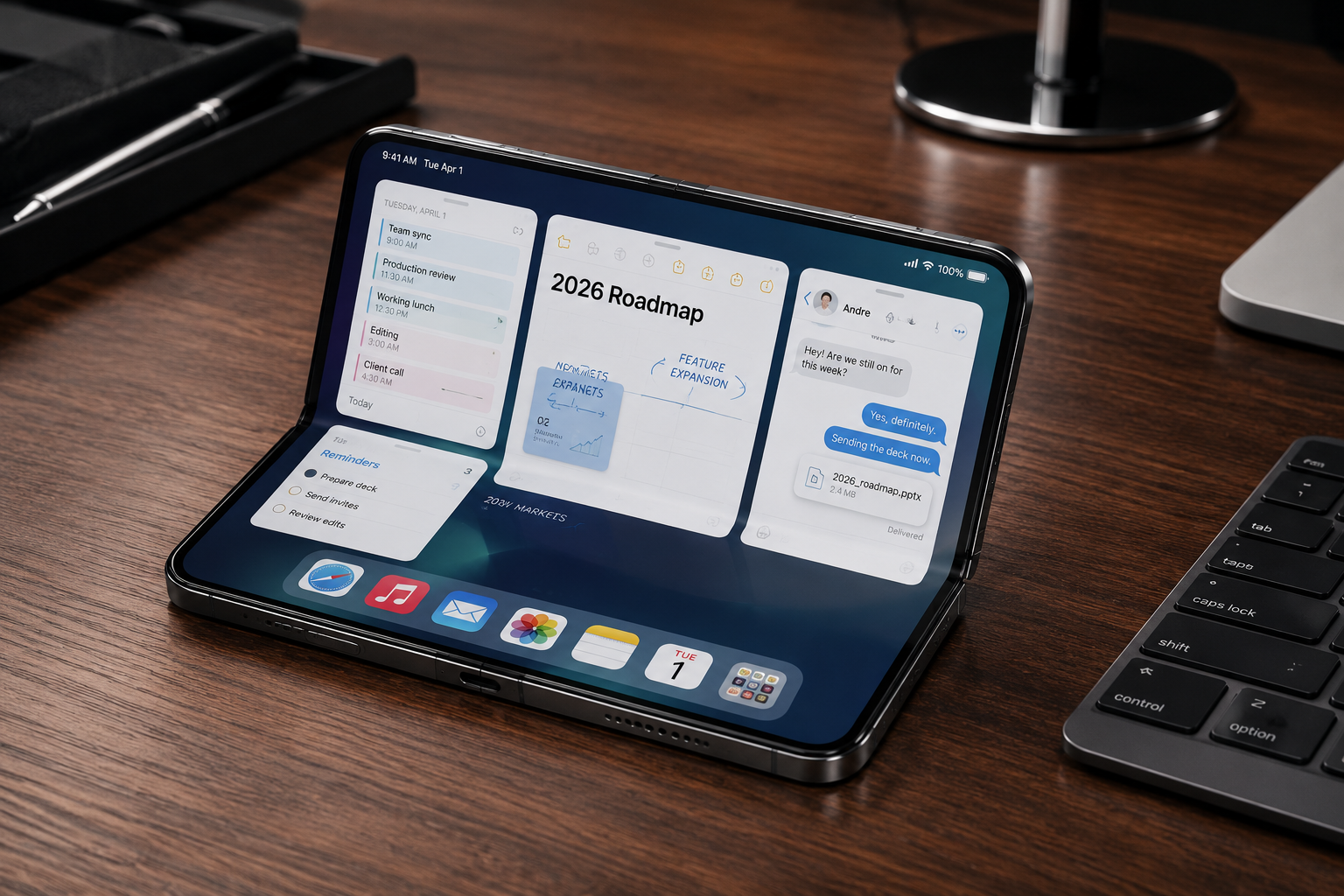
The Rumored iPhone Ultra: Apple’s Foldable Ambition at the September 9 Event
The most scrutinized element of the September 9 keynote is the prospective unveiling of Apple’s first foldable smartphone, widely referred to in supply-chain circles as the rumored iPhone Ultra or iPhone Fold.
Apple has spent years filing patents for multi-pivot hinge mechanisms, flexible ultra-thin glass (UTG), and stress-dispersing display layers. Rather than rushing a concept to market, Cupertino’s internal mandate reportedly prioritized two non-negotiable hurdles: eliminating the tactile center crease and achieving an unfolded thickness comparable to standard slab phones.
        FOLDED STATE                         UNFOLDED TABLET STATE
   +-------------------+              +-----------------------------------+
   |  Cover Screen     |              |           Inner Canvas            |
   |   (~5.4 - 5.8")   |   ========>  |           (~7.7 - 7.9")           |
   |                   |   Unfolds    |                                   |
   |  [Dual Camera]    |              |     [Zero-Crease Hinge Area]      |
   |  [Side Touch ID]  |              |                                   |
   +-------------------+              +-----------------------------------+
    Thickness: ~9-10mm                 Thickness: ~4.6-4.9mm
Design and Form Factor
Reports indicate a book-style horizontal fold rather than a clamshell flip design:
- Outer Cover Display: Sized between 5.4 and 5.8 inches, offering a compact single-handed form factor when closed.
- Inner Unfolded Display: Sized between 7.7 and 7.9 inches, transforming into a mini-tablet canvas optimized for multitasking and split-view document handling.
- Materials: A hybrid frame incorporating Grade 5 titanium outer rails with carbon-fiber-reinforced stainless steel hinge components to maximize rigidity while limiting overall weight.
Display and Crease: Engineering the Folding Screen
The visual crease has long remained the principal usability compromise of foldable smartphones. Apple’s approach reportedly relies on a proprietary display stack developed in partnership with Corning and Schott:
- Chemically Strengthened Ultra-Thin Glass: A variable-thickness glass substrate that is chemically etched along the folding axis to bend with minimal internal stress.
- Self-Healing Elastic Polymers: A top protective layer formulated to absorb micro-impacts and rebound from indentation marks over hundreds of thousands of fold cycles.
- Gearless Multi-Pivot Hinge: A waterdrop-style internal cavity that allows the display panel to fold inward at a gentle radius, significantly mitigating the physical valley visible on competing devices.
Cameras: iPhone 18 Pro Upgrades vs. Foldable Constraints
| Model | Primary Camera | Ultra-Wide | Telephoto | Front Camera |
|---|---|---|---|---|
| iPhone 18 Pro | 48MP (Fixed f/1.78) | 48MP (f/2.2) | 48MP Tetraprism (5x) | 24MP Center Stage |
| iPhone 18 Pro Max | 48MP (Variable f/1.4–f/2.8) | 48MP (f/2.2) | 48MP Tetraprism (5x) | 24MP Center Stage |
| Rumored iPhone Ultra | 48MP (Compact sensor) | 48MP (f/2.2) | Omitted or Low-Profile | Dual 12MP Under-Display |
Because book-style foldables face severe internal volume constraints when unfolded (reportedly under 5mm per wing), fitting large periscope telephoto assemblies remains an engineering challenge. Leaks suggest the rumored foldable iPhone may adopt a streamlined dual-lens system or a miniaturized sensor module to preserve its ultra-slim profile.
A20 Pro Silicon and the 2nm Node Transition
The iPhone 18 Pro family is slated to mark the commercial debut of TSMC’s 2nm (N2) manufacturing process:
- Transistor Density & Efficiency: TSMC’s N2 process adopts Gate-All-Around (GAA) nanosheet transistor architectures, replacing FinFET to drastically reduce parasitic capacitance and power leakage.
- Neural Engine Expansion: An overhauled 16-core Neural Engine designed for local token generation, allowing complex multimodal queries in iOS 27 to execute directly on the device without pinging Private Cloud Compute.
- Apple-Designed Baseband: Select variants may feature Apple’s proprietary cellular modem, engineered to optimize power handoffs between 5G sub-6GHz, mmWave, and satellite communication channels. Check out our hardware and processor analysis for technical deep-dives.
Dynamic Island, Touch ID, and Face ID Variations
The device lineup may see the most diverse approach to biometric authentication since 2017:
- iPhone 18 Pro & Pro Max: Maintain Face ID authentication, utilizing miniaturized optical emitters to reduce the Dynamic Island’s cutout size.
- Rumored Foldable iPhone Ultra: Supply-chain analysts suggest the device may bypass complex internal TrueDepth Face ID modules to conserve screen real estate and chassis depth. Instead, Apple is reportedly testing a capacitive Touch ID sensor integrated directly into the side power button, mirroring the ergonomic design established on the iPad mini and iPad Air.
Color Palettes and Material Finishes
While final commercial naming will be revealed during the keynote, supply-chain casing runs point to specific aesthetic directions:
- iPhone 18 Pro / Pro Max: Polished Grade 5 Titanium in Deep Titanium (Space Black), Natural Titanium, Silver Titanium, and a new headline shade reported as Sky Blue Titanium.
- Rumored iPhone Ultra: Ultra-refined matte ceramic and dark polished titanium, emphasizing an executive aesthetic in Cosmic Space Gray and Champagne Gold.
Apple September 9 Event: What’s Confirmed, Reported, and Rumored?
| Feature / Detail | Current Status | Current Intelligence Summary |
|---|---|---|
| September 9 Keynote | Confirmed by Apple | Officially announced for Sept 9, 2026, at Steve Jobs Theater, Apple Park. |
| Keynote Start Time | Confirmed by Apple | 10:00 a.m. PT / 1:00 p.m. ET / 10:30 p.m. IST. |
| “Surprise and shine” Tagline | Confirmed by Apple | Official media invitation text published by Greg Joswiak. |
| iPhone 18 Pro Lineup | Reported / High Confidence | Expected 6.3″ and 6.9″ form factors powered by 2nm A20 Pro silicon. |
| Foldable iPhone Existence | Reported / High Confidence | Multi-year supply-chain sourcing from Foxconn, Samsung Display, and Corning. |
| “iPhone Ultra” Branding | Rumored / Unconfirmed | Apple has not officially confirmed whether it will use “Ultra”, “Fold”, or another name. |
| A20 Pro 2nm Architecture | Reported / High Confidence | TSMC N2 process allocation confirmed in industry wafer-order reports. |
| Variable Mechanical Aperture | Reported / High Confidence | Documented by Ming-Chi Kuo & Mark Gurman for the top-tier Pro Max model. |
| Smaller Dynamic Island | Reported / High Confidence | Under-display IR components allow ~25-30% reduction in pill dimensions. |
| Power Button Touch ID | Rumored / Unconfirmed | Reported specifically for the foldable device to save internal hinge/display thickness. |
| Spring Standard iPhone 18 | Reported / High Confidence | Base iPhone 18 reportedly delayed to Spring 2027 to split release cycles. |
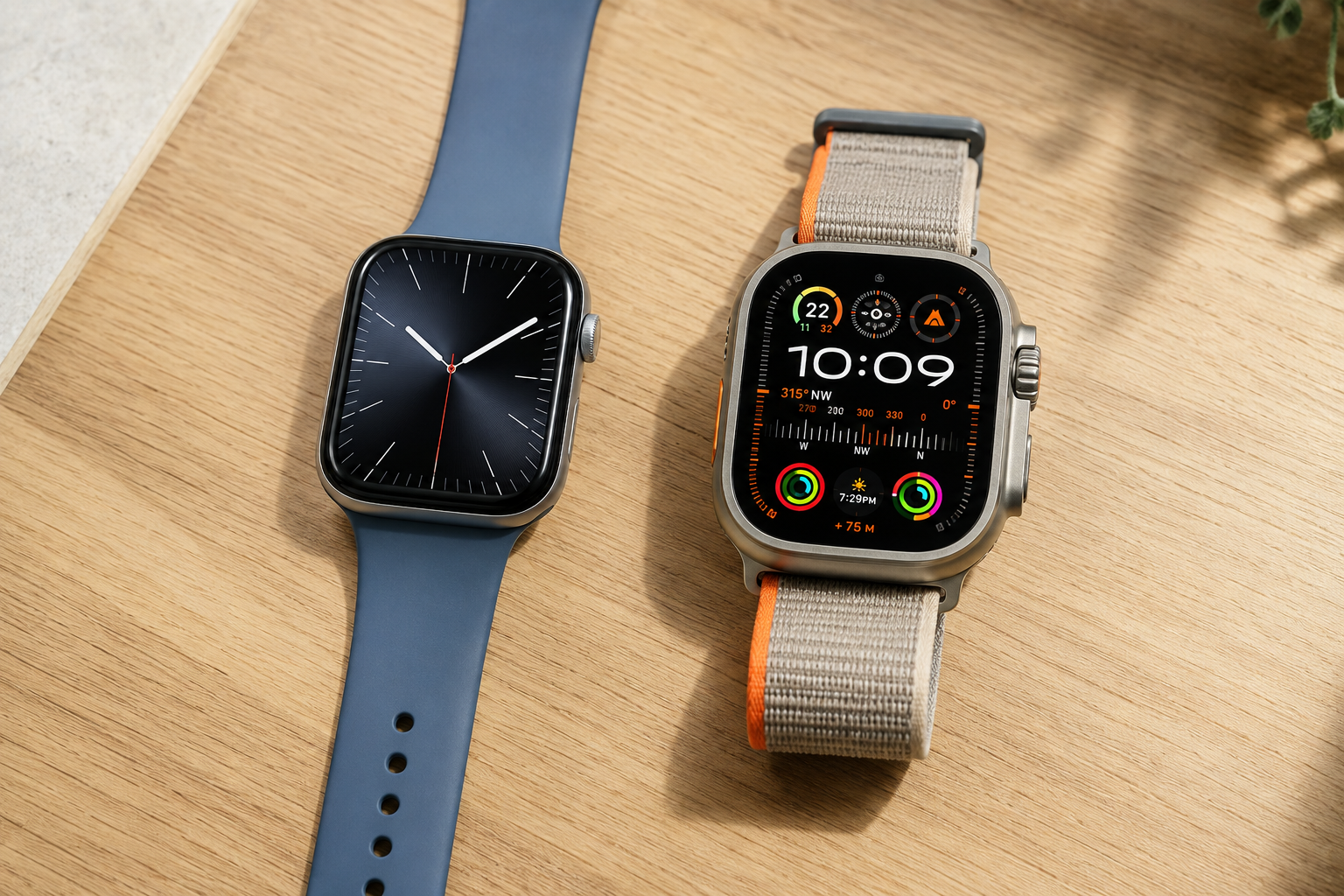
| Apple Watch Series 12 & Ultra 4 | Reported / High Confidence | Annual wearable refresh expected during the opening segment of the keynote. |
Pricing and Release Schedules
Projected iPhone 18 Pro & Pro Max Pricing
Driven by rising wafer costs associated with 2nm fabrication and standard base storage moving to 256GB across all Pro tiers, pricing is projected to see minor baseline adjustments:
- iPhone 18 Pro (256GB): $1,099 USD
- iPhone 18 Pro Max (256GB): $1,199 – $1,249 USD
How Much Could the Rumored Foldable iPhone Cost?
Given the complex mechanical hinge, dual OLED panels, and high manufacturing reject thresholds during early production runs, analysts expect the rumored device to sit well above standard flagship pricing. Projections from Wall Street and Asian supply-chain desks estimate an entry price between $1,999 and $2,499 USD.
Pre-Order and Retail Availability
- iPhone 18 Pro / Pro Max: Pre-orders are expected to open on Saturday, September 12, 2026. Apple has historically shifted pre-order dates away from Friday when the date coincides with the September 11 memorial anniversary. In-store retail availability is projected for Friday, September 18, 2026.
- Rumored Foldable iPhone: Analyst Ming-Chi Kuo warns that yield constraints at Foxconn could lead to a staggered launch. Apple may unveil the device on September 9 while opening pre-orders later in the fourth quarter of 2026 or early 2027.
Apple’s Split iPhone Launch Strategy
[ SEPTEMBER 2026 KEYNOTE ]              [ SPRING 2027 SHOWCASE ]
  * iPhone 18 Pro                         * Standard iPhone 18
  * iPhone 18 Pro Max                     * Entry iPhone 18e
  * Rumored Foldable iPhone               * iPhone Air (Gen 2)
  * Apple Watch Series 12 / Ultra 4       * iPad Lineup Updates
By decoupling standard consumer handsets from high-end enthusiast devices, Apple can maintain year-round hardware momentum, mitigate supply-chain bottlenecks, and give its cutting-edge innovations dedicated promotional space.
Apple Watch Series 12 and Ultra 4 Expectations
- Apple Watch Series 12: Expected to introduce a refined, slimmer case architecture with enhanced micro-LED or low-power LTPO3 display tech, alongside advanced metabolic and blood-pressure trend detection algorithms.
- Apple Watch Ultra 4: Retaining its 49mm rugged titanium housing, the flagship sports watch is tipped to gain satellite-powered two-way emergency messaging and extended battery profiles reaching up to 80 hours in low-power modes.
iOS 27 and Apple Intelligence Features
Hardware is only half the equation. The September 9 presentation will spotlight the public rollout of iOS 27, built from the ground up around Apple Intelligence:
- Context-Aware Siri: Deeply integrated with personal on-screen semantic understanding, allowing automated cross-application workflows.
- Foldable Multitasking (App Stash): If the foldable hardware is showcased, iOS 27 will introduce specialized split-screen window management, seamless handoff from cover display to inner canvas, and floating productivity palettes.
- Localized Privacy-Preserving LLMs: Leveraging the A20 Pro’s expanded 12GB memory footprint to execute generative transcription, visual intelligence, and contextual writing tools entirely on-device without cloud routing.
Apple vs. Samsung: The Foldable Stakes
Apple enters the foldable arena well after competitors have iterated through multiple hardware generations. Samsung’s Galaxy Z Fold series, technical hardware from Honor, Google, and OnePlus, currently dominates the sector.
However, historical precedent indicates Apple rarely prioritizes being first to market. From MP3 players to smartwatches, Apple’s strategy focuses on resolving the core ergonomic and software compromises of an emerging category:
- The Crease Hurdle: If Apple achieves a virtually imperceptible folding line, it instantly resets consumer expectations for the entire form factor.
- App Ecosystem Optimization: Leveraging its unified developer tools (SwiftUI and UIKit) to ensure third-party iPad and iPhone apps adapt responsively to a folding aspect ratio without stretching or letterboxing.
Should You Upgrade or Wait for the Next Generation?
- Upgrade to iPhone 18 Pro if: You are currently using an iPhone 14 Pro or older, your battery health has degraded, and you want the tangible benefits of 2nm silicon performance, reduced Dynamic Island dimensions, and mechanical aperture photography.
- Hold off on the Foldable iPhone if: You depend heavily on long-range telephoto zoom, prefer one-handed ergonomics, or want to avoid the high price ceiling ($2,000+) and early-generation manufacturing teething curves.
- Wait for Spring 2027 if: You want a standard, affordable iPhone 18 without paying for Pro-grade optical assemblies or experimental foldable hinges.
Frequently Asked Questions
Apple has officially confirmed that its keynote will take place on Wednesday, September 9, 2026, streaming live from Apple Park in Cupertino, California.
The event begins at 10:00 a.m. Pacific Time (1:00 p.m. Eastern Time / 6:00 p.m. BST / 10:30 p.m. IST).
Yes. The iPhone 18 Pro and iPhone 18 Pro Max are widely reported to be the headline flagship smartphones revealed during the September 9 keynote.
Apple is widely reported to be previewing or launching its first foldable book-style iPhone during the September 9 presentation, although retail availability may be constrained until later in late 2026 or early 2027 due to early manufacturing yields.
Apple has not confirmed the name. Industry analysts have used “iPhone Ultra” and “iPhone Fold” as provisional working titles.
The iPhone 18 Pro is projected to start at approximately $1,099 USD, while the rumored foldable iPhone is estimated between $1,999 and $2,499 USD due to its specialized hinge and display materials.
The iPhone 18 Pro lineup is expected to be powered by Apple’s next-generation A20 Pro processor, fabricated on TSMC’s 2nm (N2) node with 12GB of unified memory.
Multiple supply-chain reports suggest Apple is restructuring its release calendar, shifting the standard base iPhone 18 and entry-level models to a separate spring 2027 launch window.