

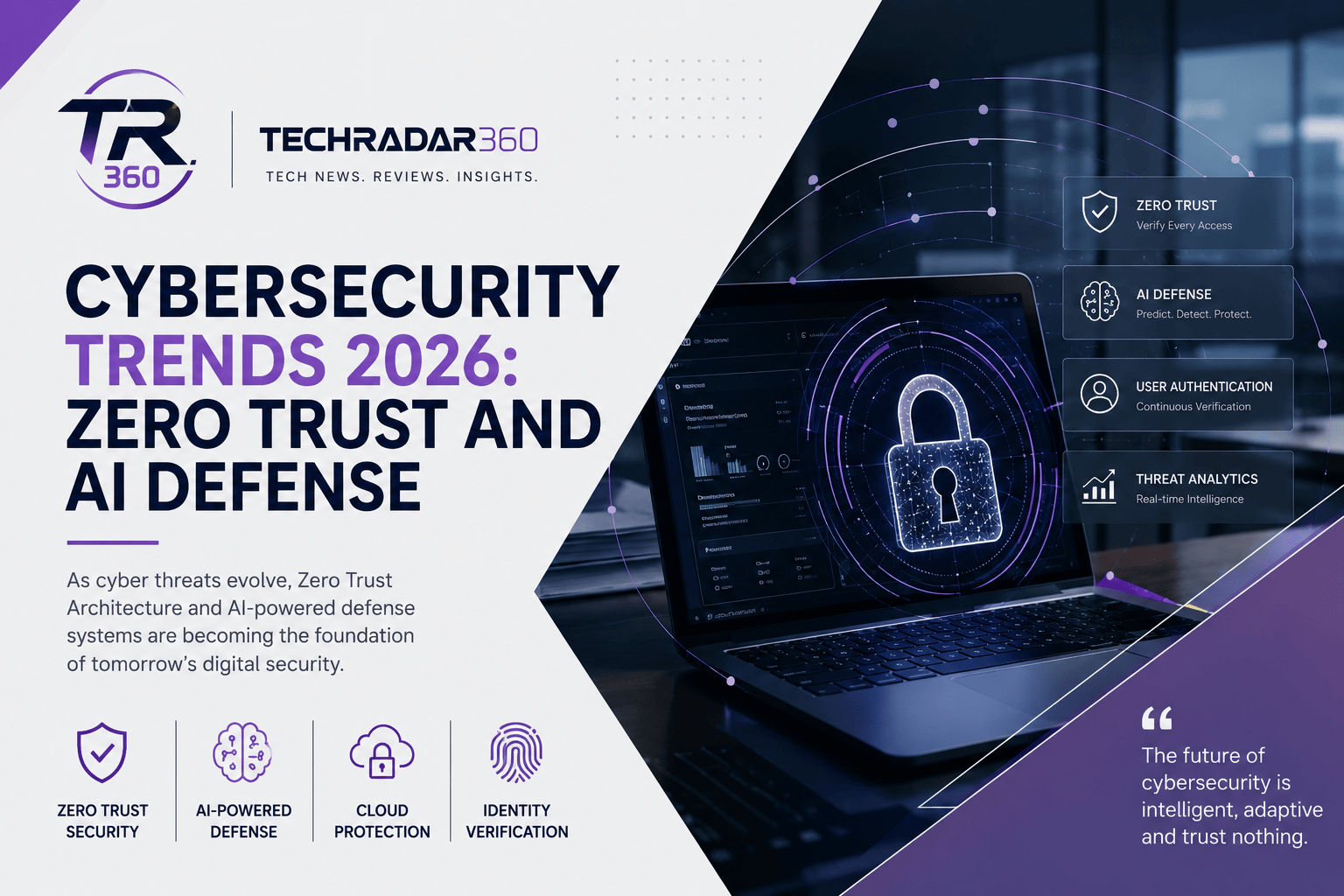

The cybersecurity landscape in 2026 is more complex and challenging than ever before. As organizations accelerate digital transformation, attack surfaces have expanded dramatically and threat actors have become increasingly sophisticated. From ransomware gangs operating as full-fledged businesses to nation-state actors targeting critical infrastructure, the threats facing modern organizations require a fundamentally different approach to security.
Zero Trust: The New Security Foundation
The Zero Trust security model has moved from buzzword to mandatory framework. Over 70% of large enterprises now have active Zero Trust initiatives, and organizations that fully implement Zero Trust report a 60% reduction in breach impact and a 40% decrease in mean time to detect incidents. The core principle is simple but powerful: “Never trust, always verify.”
Zero Trust operates on the assumption that threats exist both inside and outside the network. Every user, device, and application must be authenticated and authorized before accessing any resource. This is achieved through continuous verification, micro-segmentation, and least-privilege access controls. Organizations implementing Zero Trust typically start with identity-based security, deploying multi-factor authentication across all systems and implementing role-based access controls that limit user permissions to only what is strictly necessary for their job function.
The financial case for Zero Trust is compelling. IBM’s 2026 Cost of a Data Breach Report found that organizations with mature Zero Trust deployments saved an average of $1.76 million per breach compared to those without. Additionally, insurance providers are increasingly offering premium discounts to organizations that can demonstrate Zero Trust implementation, making it not just a security measure but a financial one as well.
AI-Powered Defense Systems
Artificial intelligence has become the most powerful weapon in the cybersecurity arsenal. AI-powered Security Operations Centers (SOCs) can analyze millions of events per second, identifying patterns impossible for humans to detect. Machine learning models establish baselines of normal behavior and flag anomalies in real-time, while generative AI automates incident response and threat hunting.
However, the same AI capabilities are being weaponized by attackers. AI-generated phishing emails are now virtually indistinguishable from legitimate communications. Deepfake technology is being used for social engineering attacks, with voice cloning enabling convincing phone-based fraud. Organizations must invest in AI-powered defenses to match the sophistication of AI-powered attacks.
Modern AI security platforms offer several key capabilities. Behavioral analytics can detect compromised accounts by identifying deviations from normal user patterns. Network traffic analysis powered by machine learning can identify encrypted threats without decrypting traffic. Automated threat intelligence platforms continuously monitor the dark web and threat feeds, providing early warning of emerging threats.
The Evolving Threat Landscape
Ransomware remains the most significant cybersecurity threat in 2026. Modern ransomware groups operate like professional businesses, with dedicated development teams, customer support for victims, and affiliate programs that distribute attack tools to less sophisticated criminals. Double and triple extortion tactics have become standard, with attackers not only encrypting data but also threatening to release stolen information and launching DDoS attacks against victims.
Supply chain attacks have increased by 300% since 2023, representing one of the fastest-growing threat categories. Attackers target software vendors, managed service providers, and open-source projects to gain access to thousands of downstream organizations through a single compromise. The SolarWinds and Log4j incidents demonstrated the devastating potential of supply chain attacks, and threat actors continue to refine these techniques.
Nation-state actors have become more aggressive, targeting critical infrastructure, intellectual property, and defense contractors. Cyber warfare capabilities are now considered essential military assets, and several nations maintain dedicated cyber units with thousands of operatives. The line between criminal and state-sponsored activity continues to blur, with some nations providing safe harbor to cybercriminal groups in exchange for cooperation on state objectives.
Industry-Specific Challenges
Healthcare organizations face unique cybersecurity challenges due to the critical nature of their services and the sensitivity of patient data. Medical devices often run outdated operating systems that cannot be patched, creating persistent vulnerabilities. The rise of telemedicine and connected health devices has expanded the attack surface significantly. Healthcare data is particularly valuable on the dark web, fetching up to $250 per record compared to $5-10 for credit card numbers.
Financial services remain a prime target for cybercriminals due to the direct access to monetary assets. Real-time payment systems have created new opportunities for fraud, with attackers exploiting the speed of transactions to intercept funds before they can be recovered. Banks and financial institutions are investing heavily in AI-powered fraud detection systems that can analyze transaction patterns in milliseconds.
Manufacturing and industrial organizations face growing risks as operational technology (OT) systems become increasingly connected to IT networks. Industrial control systems that were once isolated are now accessible remotely, creating opportunities for attackers to disrupt physical processes. The potential for cyberattacks to cause physical damage or safety incidents makes OT security a critical priority.
Cybersecurity Skills Gap
The cybersecurity skills gap remains one of the most pressing challenges facing organizations worldwide. There are currently over 4 million unfilled cybersecurity positions globally, with demand growing at 25% annually. This shortage forces organizations to rely on automation and managed security services to fill the gap, driving further adoption of AI-powered security tools.
Salaries for experienced cybersecurity professionals have risen sharply, with senior security architects and CISOs commanding compensation packages exceeding $400,000 in major markets. This has created a talent war between organizations, with smaller companies often unable to compete with the compensation packages offered by large enterprises and technology companies.
To address the skills gap, organizations are investing in training and development programs, creating cybersecurity apprenticeships, and partnering with educational institutions. Cloud security, AI security, and incident response are the most in-demand specializations, reflecting the evolving technology landscape and threat environment.
Best Practices for 2026
Organizations seeking to strengthen their cybersecurity posture should adopt a defense-in-depth approach that combines multiple security layers. This includes deploying multi-factor authentication across all systems, implementing endpoint detection and response (EDR) solutions, maintaining comprehensive security information and event management (SIEM) capabilities, and conducting regular security awareness training for all employees.
Incident response planning is essential. Organizations should maintain detailed, tested incident response plans that cover detection, containment, eradication, and recovery. Tabletop exercises and red team assessments help identify weaknesses in security processes and ensure teams are prepared to respond effectively to real incidents.
Regular security assessments, vulnerability scanning, and penetration testing help identify and remediate weaknesses before attackers can exploit them. Organizations should also implement comprehensive logging and monitoring capabilities to detect threats early and maintain forensic evidence for incident investigation.
Looking Ahead
The cybersecurity landscape will continue to evolve rapidly. Quantum computing poses an emerging threat to current encryption standards, and organizations should begin planning for post-quantum cryptography. The convergence of IT, OT, and IoT systems creates new attack surfaces that require innovative security approaches. As threats become more sophisticated, organizations must invest continuously in people, processes, and technology to maintain effective cybersecurity defenses.