India Bans Real-Money Gaming Ads, Ludo King Pivots to Esports Model
India's Ministry of Information & Broadcasting bans all real-money gaming advertisements, forcing companies like Dream11, MPL, and Ludo King to pivot to esports and subscription models.
Aditya Raj
July 17, 2026
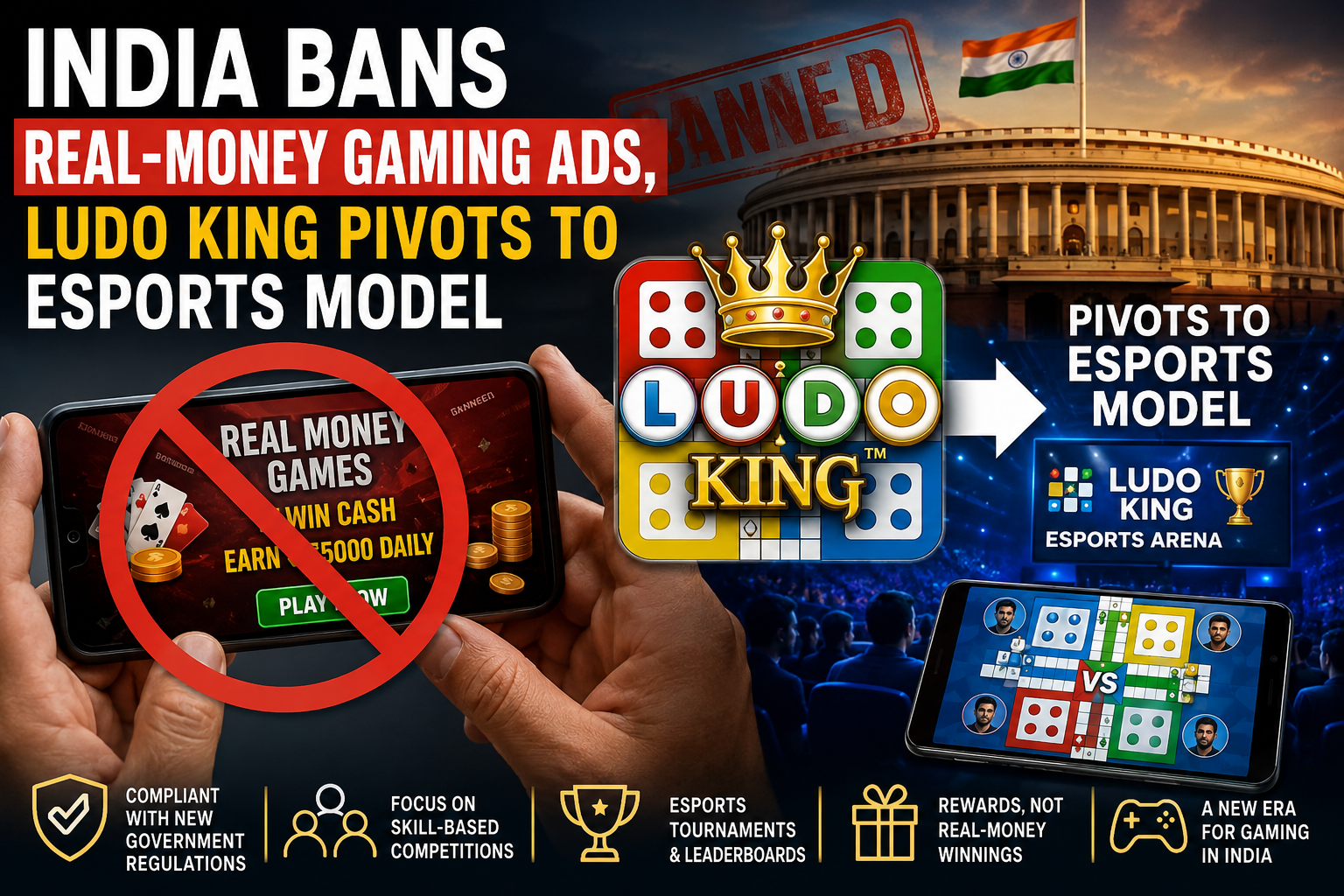
India bans all real-money gaming ads. Ludo King pivots to esports (₹10 crore Pro League) and subscriptions (₹99/month). Dream11 lays off 40%, MPL shuts RMG vertical. Industry restructuring drives $800M VC funding into real game development. By 2028: 60% casual/esports, 25% premium, 15% regulated RMG.
The ban has triggered a massive industry restructuring. Dream11 laid off 40% of its workforce and is pivoting to a sports analytics platform. Mobile Premier League (MPL) has shut down its real-money vertical entirely and relaunched as an esports tournament platform. The positive side effect: venture capital is now flowing into genuine gaming startups. Indian game development studios raised over $800 million in 2026 for original game development, up from $200 million in 2024. Games like Indus Battle Royale and Mayanagari have found global audiences. Industry analysts predict that by 2028, India's gaming industry will transform from a RMG-dominated market to a balanced ecosystem with 60% casual/esports, 25% premium/AAA, and only 15% skill-based wagering under strict regulation."The RMG industry took gaming in the wrong direction — addiction disguised as skill. The future of Indian gaming is esports, subscriptions, and in-app purchases for genuine entertainment value."
— Vikash Jaiswal, Ludo King Creator
Advertisement
Key Takeaways
- 1Government bans ALL real-money gaming ads across TV, digital, and print media
- 2Ludo King pivots to esports model with ₹10 crore Pro League and ₹99/month subscription
- 3Dream11 lays off 40% workforce, pivots to sports analytics; MPL shuts RMG vertical entirely
- 4$800 million VC funding raised by Indian game studios in 2026 for original game development
- 5Industries projected transformation by 2028: 60% esports/casual, 25% premium, 15% regulated RMG
Frequently Asked Questions
What types of gaming ads are banned?
All real-money gaming advertisements including fantasy sports, rummy, poker, and skill-based wagering platforms.
How is Ludo King adapting?
Launching the Ludo King Pro League esports with ₹10 crore prize pool and a ₹99/month premium subscription tier.
What happens to Dream11 and MPL?
Dream11 laid off 40% and pivoted to sports analytics. MPL shut down its real-money vertical and became an esports platform.
Loading comments...