


In a decisive move to regulate big tech, the European Union is intensifying its pressure on Google under the Digital Markets Act (DMA). The tech giant is currently facing the prospect of massive fines for alleged anti-competitive practices, alongside groundbreaking new mandates that force the company to open its closely guarded search data and Android ecosystem to rival artificial intelligence developers.
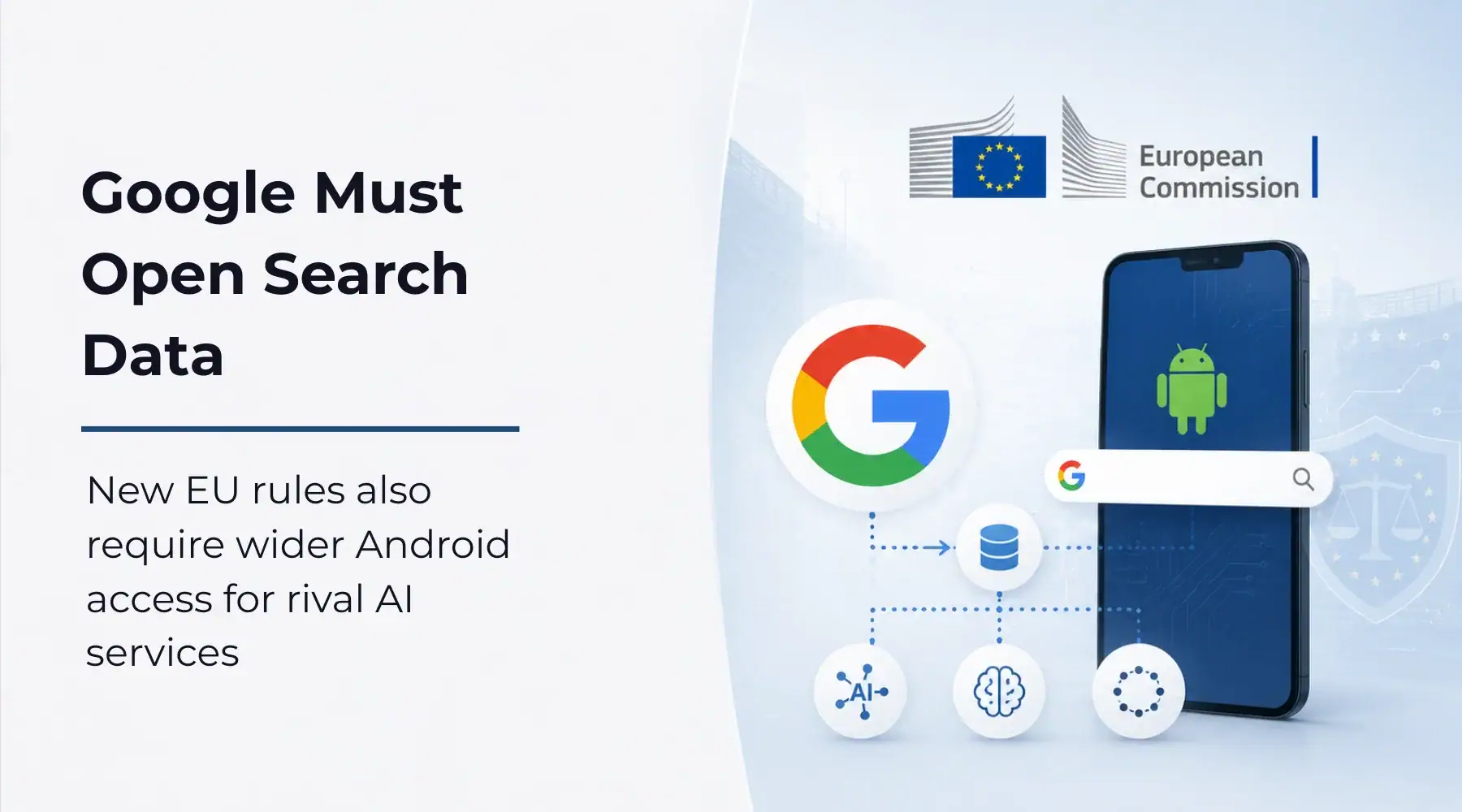
Google faces unprecedented data sharing mandates under EU rules
The Looming Threat of DMA Fines
The European Commission is expected to hit Google with a fine amounting to “hundreds of millions of euros” in the near future. This penalty stems from a long-running investigation into Google’s self-preferencing tactics within its search engine and the anti-steering rules present in the Google Play Store. Preliminary findings issued in March 2025 concluded that Google breached the DMA by treating its own services more favorably in search results and by preventing app developers from informing users about alternative purchasing options outside of Google Play. Under the DMA framework, severe non-compliance can lead to penalties of up to 10 percent of a company’s global annual revenue.
Breaking the Android Ecosystem Open for Rival AI
Beyond financial penalties, the EU has introduced two binding decisions aimed at leveling the playing field for AI development. The first measure mandates that competing AI assistants, such as OpenAI’s ChatGPT or Anthropic’s Claude, must receive full access to key features within the Android operating system.
- Currently, third-party AI tools have restricted access compared to Google’s own Gemini.
- Under the new rules, users will be able to activate their preferred rival AI assistant using voice commands similar to “Hey Google”.
- These third-party assistants will also be empowered to execute system tasks, such as booking a taxi or managing in-app conversations.
Google is required to implement these sweeping changes to the Android operating system by July 2027.
Sharing Search Data with the Competition
The second binding decision strikes at the core of Google’s business model by requiring the company to share its anonymized search engine data with competing search providers.
- This shared data must include crucial metrics like query results, ranking signals, and click-through rates.
- The EU has explicitly stated that AI-powered chatbots offering search functionalities are also eligible to access this shared dataset.
- Google must begin sharing this vital search data with eligible operators starting in January 2027.
Google faces intense regulatory pressure from the European Commission
The Balance Between Competition and Privacy
The European Commission asserts that these data-sharing mandates were developed in close collaboration with privacy experts to ensure strict anonymization and compliance with data protection norms. However, Google has voiced strong opposition to the rulings. Kent Walker, Google’s President of Global Affairs, warned that opening up Android’s permissions and sharing search insights could bypass established safeguards and jeopardize the privacy and security of millions of European users.
As the deadlines approach, the technology industry will be watching closely to see if the EU’s aggressive enforcement of the Digital Markets Act successfully fosters a more diverse and competitive AI landscape, or if it fundamentally alters the security architecture of the devices millions rely on every day.